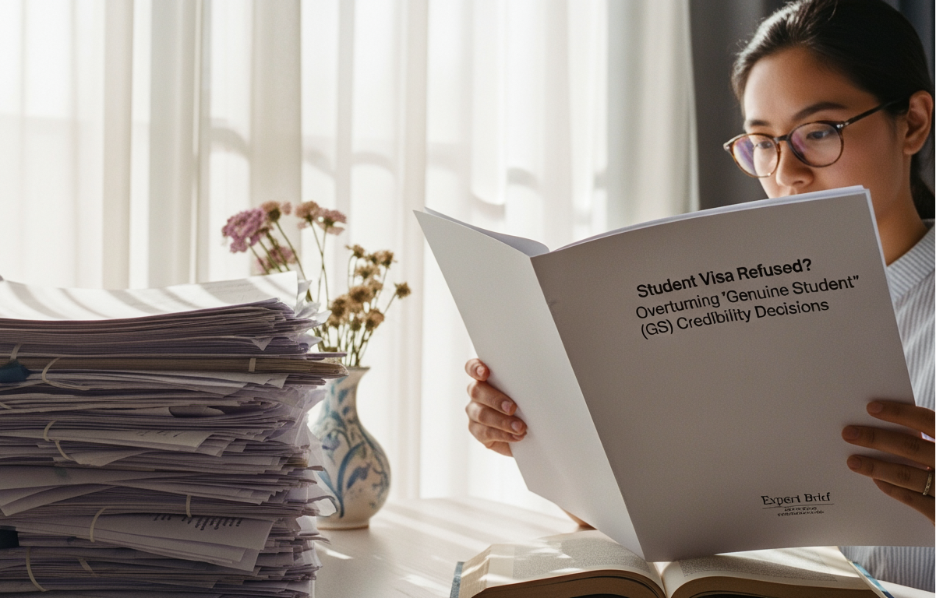
From the historic campuses of Glasgow to the innovative research centres across the country, Scotland offers an exceptional academic experience. However, the path to a UK Student visa can be challenging, and even a minor error in the application process can lead to a visa refusal. This blog article provide reliable, actionable advice that will help you handle the visa process with confidence.
Introduction to the Student Visa Application
The UK Student visa is a points-based immigration system. This means that to be successful, an applicant must score a certain number of points by meeting a series of strict requirements. You gain points by providing a valid Confirmation of Acceptance for Studies (CAS), demonstrating that you have enough money to pay for your course and living costs, and proving your identity. The Home Office’s assessment is objective and based entirely on the evidence you provide, making a complete and accurate application non-negotiable.
The Importance of a Complete Application
The Student visa application process is highly procedural. The Home Office caseworker will not make assumptions or go looking for missing information. If a single document is missing, an a specific detail is incorrect, or a piece of evidence does not meet the specified format, the application may be refused. A critical approach to every detail is the only way to ensure a successful outcome.
The Focus on Students from South Asia
While the rules are the same for all international students, a greater level of scrutiny is often applied to applicants from certain regions, including South Asia. This can include more thorough checks on financial documents and a higher likelihood of being called for a credibility interview. Being aware of this focus makes it even more important for you to prepare a detailed and robust application that leaves no room for doubt.
Avoiding Common Pitfalls in Your Application
This section will address the most common reasons for student visa refusals for South Asian students. By understanding these pitfalls, you can take proactive steps to ensure your application is as strong as possible.
The Confirmation of Acceptance for Studies (CAS)
The CAS is the cornerstone of your Student visa application. It is a unique electronic reference number that your university provides, containing all the key details of your course, your fees, and any payments you have already made. Without a valid CAS, you cannot apply for a visa.
Verifying your CAS letter details.
Before you submit your application, you must carefully check that every detail in your CAS letter is accurate. Your name, date of birth, and nationality must be an exact match to your passport. The course title, start date, and tuition fees must also be correct. Any inconsistency, no matter how small, could lead to a refusal.
The Financial Requirement
Insufficient or improperly documented funds are one of the most common reasons for student visa refusals. You must prove that you have enough money to cover your first year’s tuition fees (minus any deposits paid) and your living costs for up to nine months.
The 28-day rule and its importance.
This is a critical and often misunderstood rule. You must show that the required amount of money has been in your or your parents’ bank account for a continuous period of at least 28 consecutive days. The end date of this 28-day period must be within 31 days of the date you submit your online visa application. If the balance drops below the required amount for even a single day, the application will be refused.
Acceptable proof of funds.
The Home Office is specific about what constitutes acceptable evidence. Acceptable documents include official bank statements, a formal letter from your bank, or a loan letter from a regulated financial institution. You cannot use business accounts, overdraft facilities, or cryptocurrency as proof of funds. If you are using your parents’ account, you must also provide your birth certificate and a letter of consent from them.
Providing Genuine Documents
The Home Office has a department for fraud detection. Submitting fake or forged documents is not only a reason for refusal but will also result in a severe, long-term re-entry ban to the UK.
The risks of fake or inconsistent information.
The Home Office has sophisticated methods to verify documents, including cross-referencing information with financial institutions and educational bodies. Any inconsistency between your application and your supporting documents will be a major red flag. Always be truthful and provide genuine, verifiable paperwork.
The Credibility Interview and Your Sincerity
As part of the application process, you may be invited to attend a credibility interview. This is a short interview conducted by a Home Office official to assess your genuine intent to study. It is not an academic test, but rather a check of your honesty and sincerity.
Proving You are a Genuine Student
The interviewer wants to be sure you are not using the student visa as a backdoor to the UK. You must be able to articulate a clear and convincing reason for your study plans.
Preparing to discuss your course and university choice.
You should be prepared to discuss why you chose your specific course and Scottish university. This means researching the course content, the university’s reputation, and how a UK qualification will benefit your future career goals. You should also be prepared to explain why you chose to study in Scotland over other countries or your home country.
Addressing Gaps in Your Academic History
If you have any significant gaps in your academic history—for example, if you took a year off after graduation—the interviewer may ask you to explain them. You must be able to provide a clear and credible reason for this time, such as work experience, family commitments, or a travel period. Providing supporting documentation, such as letters from an employer, can be helpful.
Disclosing Previous Visa Refusals
It is crucial to be completely honest about any previous visa refusals you have had from the UK or any other country. The Home Office has access to this information, and attempting to hide it will be seen as an act of deception, leading to an automatic refusal of your application. Honesty is always the best policy.
Essential Documents Checklist
To help you get started, here is a concise checklist of the key documents every student applicant must prepare.
Your Passport and Academic Certificates
You must have a valid passport that will be valid for the entire duration of your planned stay. You also need to provide your official academic transcripts and degree or diploma certificates from all your previous studies.
Proof of English Language Proficiency
You will need to provide an English language test certificate, such as an IELTS, from an approved provider. The required score will depend on the level of your course. Your university’s CAS letter will confirm whether you need to provide this.
Tuberculosis (TB) Test Certificate
Students from a number of countries, including India, Pakistan, and Bangladesh, are required to get a TB test. You must obtain a TB test certificate from a Home Office-approved clinic and submit it with your visa application. This certificate is valid for six months from the date of the test.
How JRI Law Experts Can Assist You
The student visa application process is detailed and unforgiving. Even a small error can be costly. At JRI, our expert immigration solicitors have extensive experience in assisting students from South Asia with their applications to Scottish universities. We provide the professional and supportive guidance you need to handle this process successfully.
Professional Application Review and Support
Our team can review your entire application before you submit it to the Home Office. We will check your CAS letter, financial documents, and all other supporting evidence to identify any potential errors or weaknesses. Our approach ensures your application is as robust and complete as possible, significantly increasing your chances of a positive outcome.
Specialist Advice on Refusals
If your visa application is refused, all is not lost. The refusal letter is not the end of the road. Our solicitors can analyse the refusal notice and provide expert advice on your options, which may include requesting an Administrative Review or making a new application. We will guide you on the most strategic path forward to help you achieve your goal of studying in Scotland.