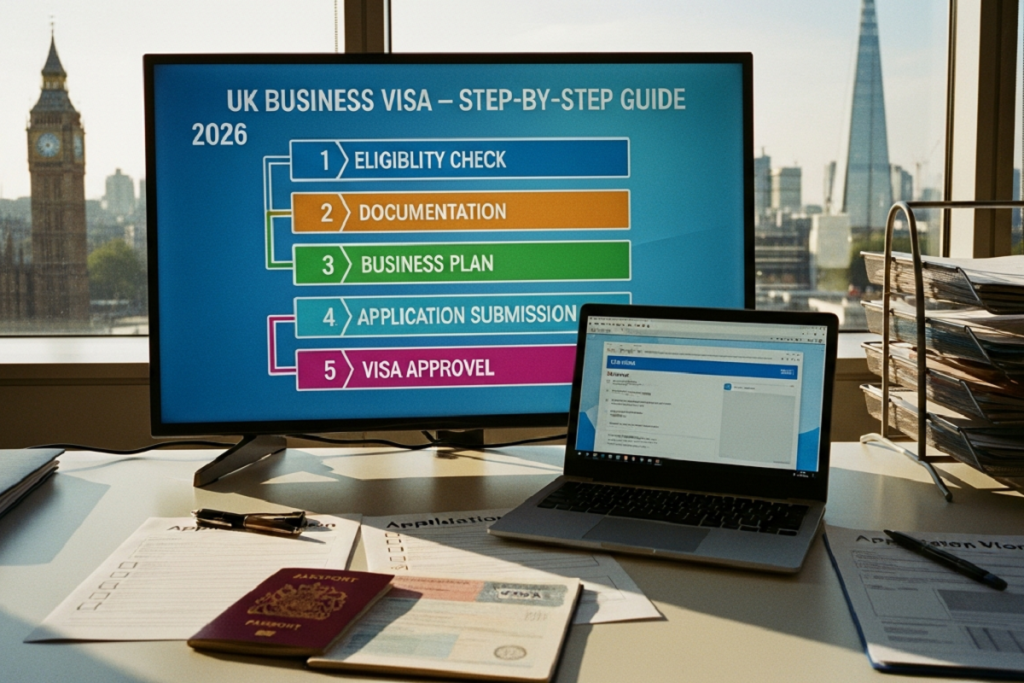
The UK remains a global magnet for entrepreneurial talent, and Glasgow is currently at the heart of Scotland’s surge in tech and sustainable energy startups. However, for international founders, the primary hurdle isn’t the market it’s the law. If you are a non-UK national, establishing a business in 2026 requires precise legal permission. Without the correct status, you risk capital loss, administrative penalties, and even removal from the country.
Determining Your Strategic Business Route for 2026
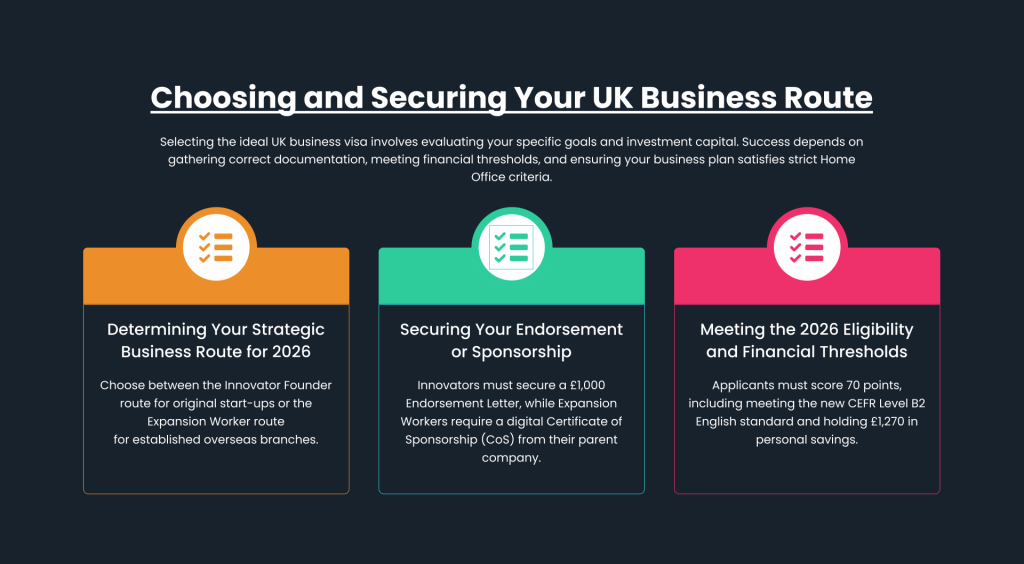
Before you begin your application, you must identify which visa category fits your commercial structure. The 2026 rules have further refined the distinction between independent “founders” and “corporate representatives.” Our lawyers at JRI often see applicants choose the wrong route, leading to costly delays; we ensure your chosen path aligns with your long-term goals.
The Innovator Founder Visa: For the Visionary Entrepreneur
The Innovator Founder Visa is the flagship route for those bringing a new business idea to the UK. In 2026, the Home Office focuses heavily on your business plan’s Innovation, Viability, and Scalability.
- Key Advantage: It offers a 3-year path to Indefinite Leave to Remain (ILR) one of the fastest settlement routes in the UK.
- Active Role: You must be the “sole founder” or an “instrumental member” of the founding team with a day-to-day role in management.
- Business Nature: The business must be “new.” You cannot join an existing entity that is already trading.
The UK Expansion Worker Visa: Establishing a Scottish Branch
If your business already operates outside the UK and you wish to open a hub in Glasgow, this is your pathway. It belongs to the Global Business Mobility umbrella.
- Purpose: To send a senior representative to the UK to set up the first commercial footprint.
- Requirement: The overseas parent company must have been trading for at least 12 months unless you are a “high earner” (earning over £73,900).
- Salary Threshold: In 2026, the minimum salary for this route is £52,500 per year or the “going rate” for the role, whichever is higher.
Step 1: Securing Your Endorsement or Sponsorship
In 2026, you cannot simply apply to the Home Office. You first need a “gatekeeper” to verify your business credentials. This is where many DIY applications fail, as the scrutiny of business plans has reached a peak.
1. For Innovator Founders: The Endorsement Letter
You must obtain an Endorsement Letter from an approved body. As of 2026, these bodies charge a standardised £1,000 fee to assess your plan.
- The Assessment: They check if your idea is truly “Innovative” (different from anything else on the UK market).
- The Monitoring: If successful, you must attend mandatory “Contact Point” meetings at the 12 and 24-month marks (costing £500 each).
2. For Expansion Workers: The Certificate of Sponsorship (CoS)
Your overseas employer must obtain a Sponsor Licence. They then issue you a digital Certificate of Sponsorship (CoS).
- The Link: This acts as the legal bridge between your job and your visa.
- The Responsibility: Your employer is responsible for reporting your start date and any changes in salary to the Home Office.
Step 2: Meeting the 2026 Eligibility and Financial Thresholds
The 2026 standards are higher than previous years. Our experts at JRI provide a “pre-audit” service to ensure our clients meet these rigid benchmarks before they pay the non-refundable Home Office fees.
For the Innovator Founder route, you must score a total of 70 points. This is broken down as follows:
- Business Endorsement (50 Points): Secured from an approved body.
- English Language (10 Points): In 2026, you must meet CEFR Level B2 (roughly IELTS 5.5).
- Maintenance Funds (10 Points): You must show you can support yourself without public funds.
2026 Financial and Health Costs
| Fee Category | Cost per Person (Approx.) |
| Visa Application Fee | £1,274 (Applying outside UK) |
| Immigration Health Surcharge (IHS) | £1,035 per year |
| Endorsement Fee | £1,000 (Innovator Founder only) |
| Personal Savings | £1,270 (Held for 28 consecutive days) |
Step 3: The Digital Application and Biometric Process
Once you have your endorsement or sponsorship, the clock starts. You must apply within three months of receiving your letter or CoS. In Glasgow, our solicitors handle the entire digital filing to ensure no errors trigger a rejection.
The Digital ID Check
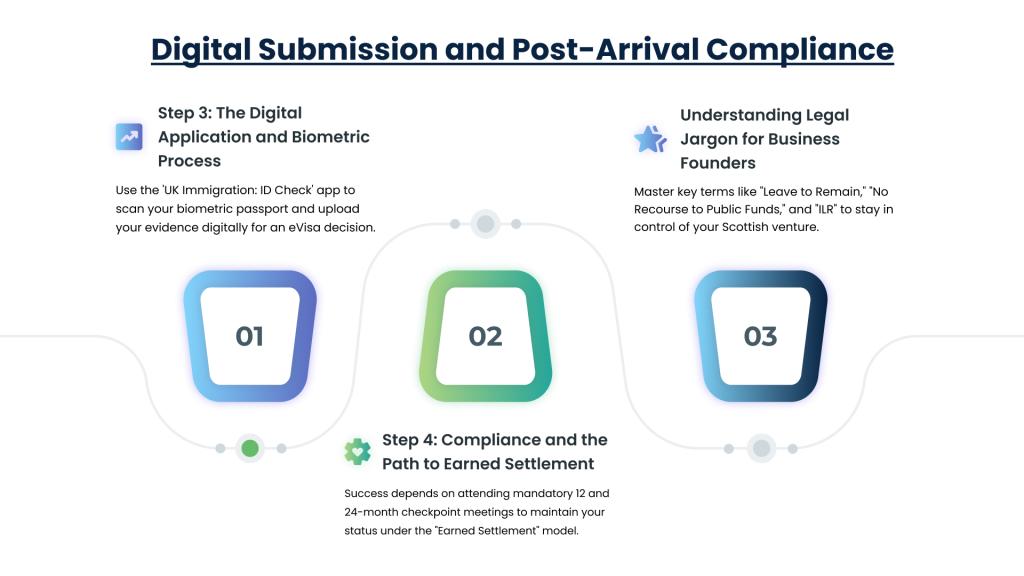
The UK has fully transitioned to the eVisa system. Most applicants now use the ‘UK Immigration: ID Check’ app to scan their biometric passport. This often removes the need to visit a physical visa centre.
- Scan your passport: Follow the app instructions to upload your biometric chip.
- Upload documents: Self-upload bank statements, endorsement letters, and SELT certificates.
- Wait for the Decision: Standard processing for non-settlement visas is usually 3 weeks. If applying from within the UK, it can take up to 8 weeks.
Step 4: Compliance and the Path to Earned Settlement
Starting in April 2026, the UK has introduced the Earned Settlement system. This points-based framework allows you to potentially speed up your path to permanent residency if your business shows high performance.
Maintaining Your Status
Compliance is the most critical part of your journey. JRI provides ongoing corporate immigration support to help you navigate:
- Checkpoint Meetings: If you miss your 12 or 24-month meetings with your endorsing body, they must report you to the Home Office.
- Visa Curtailment: If your business is no longer trading, your visa can be cut short, giving you 60 days to leave.
- Director Duties: Ensure your role as a Director at Companies House matches your visa description exactly.
Understanding Legal Jargon for Business Founders
Our JRI solicitors believe in transparency. Here are the key terms you will encounter:
- Certificate of Sponsorship (CoS): The digital record your sponsor creates to link you to a specific role.
- Leave to Remain: The official permission granted by the government to stay in the UK.
- No Recourse to Public Funds: A condition on most business visas stating you cannot claim state benefits.
- Indefinite Leave to Remain (ILR): Permanent residency status, which you can typically apply for after 3 years on an Innovator Founder visa.
- Non-Domestic Rates: The Scottish term for business rates, which you must pay on any commercial premises in Glasgow.
How JRI’s Glasgow Solicitors Support Your Business Goals
The 2026 immigration rules attract global talent, but the legal framework remains a barrier for those without expert guidance. At JRI, our lawyers are more than just legal advisors; we are your partners in growth.
Our Expertise Includes:
- Business Plan Audits: We ensure your plan meets the strict “Scalability” requirements of 2026 endorsing bodies.
- Sponsorship Management: We assist Glasgow firms in maintaining their Sponsor Licences and passing Home Office compliance audits.
- Scottish Integration: We provide local advice on registering your business at Companies House and adhering to Scottish Non-Domestic Rates and employment laws.