The uncertainty surrounding the timeline for an immigration appeal is a major concern for all applicants. In Scotland, the legal challenge to a negative Home Office decision is managed by the First-tier Tribunal, with proceedings typically taking place at the Glasgow Tribunals Centre. This guide outlines the mandatory steps and realistic timeframes for this process, establishing a clear understanding of the full procedural duration.
The Initial Stages: Statutory Deadlines and Lodging the Appeal
The journey begins with the strict requirement to challenge the refusal decision within a prescribed timeframe. Failure to meet these statutory deadlines may result in the appeal being rejected by the Tribunal.
Mandatory Deadlines: Calculating Your Time Limit to Appeal
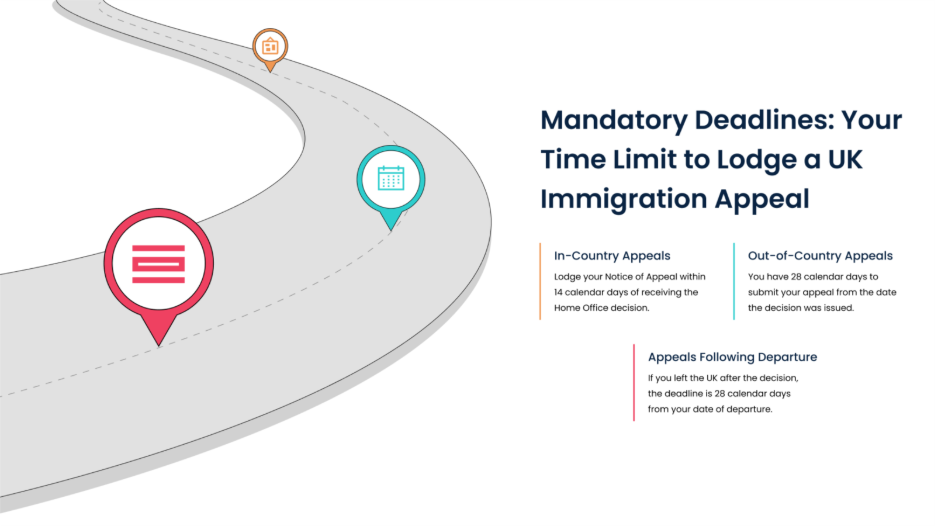
The window for submitting a Notice of Appeal to the First-tier Tribunal is calculated from the date the Home Office decision is issued. The statutory timeframes for challenging a refusal are:
- In-Country Appeals: The Notice of Appeal must be received by the Tribunal within 14 calendar days.
- Out-of-Country Appeals: The appeal must be received within 28 calendar days.
- Appeals Following Departure: If the appellant was in the UK when the decision was made, the deadline is 28 calendar days from the date of their departure.
The Home Office Review and Appeal Bundle
Once the appeal is lodged with the Tribunal, the Home Office must take specific procedural steps before the case is prepared for a hearing.
- Respondent’s Review: The Home Office must first conduct a review to reconsider the original decision. This review process usually takes 28 days from the date the appeal was received by the Tribunal.
- Submission of the Appeal Bundle: If the decision is not withdrawn, the Home Office prepares the Appeal Bundle for the Tribunal. This bundle, which contains all the Home Office’s evidence and reasoning, is crucial for the Appellant and their legal team to finalise their case and anticipate the arguments of the Home Office Presenting Officer (HOPO) at the hearing.
The Core Waiting Period: First-tier Tribunal Processing Times
The period between lodging the appeal and the substantive hearing constitutes the longest phase of the process. This duration is heavily influenced by the Tribunal’s caseload and administrative efficiency at the local level.
Realistic Timeline Averages: Lodging to Determination
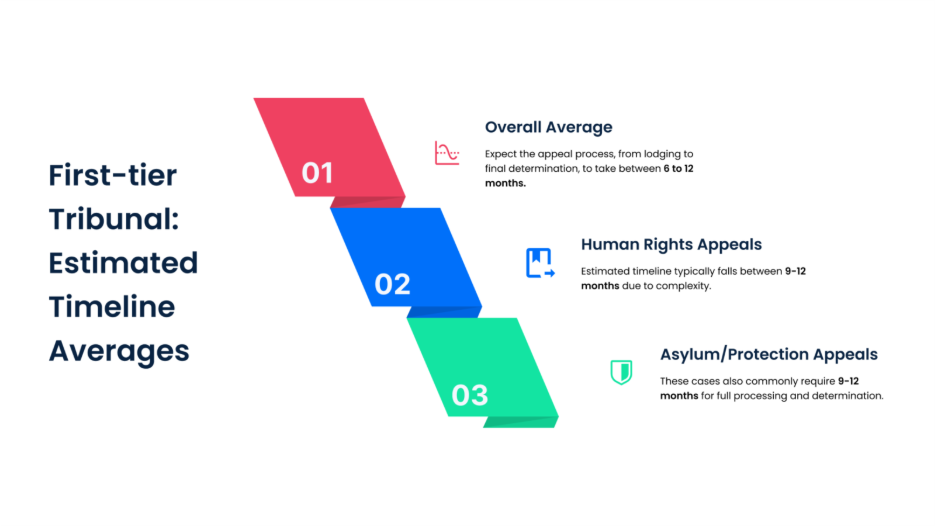
Based on current Tribunal statistics and operational reality, the realistic average time from lodging the appeal to receiving the final Determination often ranges from 6 to 12 months.
- The overall processing time can be longer depending on the specific legal category of the appeal, reflecting the complexity and priority allocated to different types of cases:
| Appeal Type (General Averages) | Estimated Timeline |
| Human Rights Appeals (Article 8 ECHR) | 9-12 months |
| Asylum/Protection Appeals | 9-12 months |
Factors Causing Procedural Delay
Factors that commonly extend the appeal timeline include those listed below, many of which are outside the appellant’s control:
- Judicial Case Management: Directions issued by an Immigration Judge requiring further evidence or steps, leading to an extension of procedural timetables.
- Respondent Delays: Late submission of the Respondent’s Review or the Home Office Bundle is a common cause for delay and may necessitate adjournment of the hearing date.
- Evidentiary Complexity: Cases requiring expert reports or complex foreign language documentation require more preparation time, often leading to later listing dates.
- Adjournments: Requests for an adjournment (postponement) by either party, though subject to the Judge’s permission, will extend the timeline.
Expedited Hearings
In limited circumstances, an appellant may apply for an expedited hearing to shorten the waiting period.
- Requirement: The Tribunal will only consider such a request in cases involving exceptional urgency, such as imminent removal (if a right of appeal is pending), severe and life-threatening health grounds, or other compelling compassionate circumstances.
- Discretion: The grant of an expedited listing remains entirely at the discretion of the Immigration Judge under the Tribunal’s inherent case management powers.
Receiving the Determination
Following the hearing, the Immigration Judge issues the written decision, known as the Determination.
- Timeframe: The Determination is typically reserved and issued within a few weeks of the hearing date.
- Outcomes: The appeal will be either “appeal allowed” (successful, meaning the Home Office must reconsider or grant the application) or “appeal dismissed”.
Post-Dismissal Recourse: Upper Tribunal and Judicial Review
If the appeal is dismissed, there are further avenues for legal challenges, which will add substantial time to the overall process.
- Permission to Appeal to the Upper Tribunal:
- The appellant must apply to the First-tier Tribunal for Permission to Appeal to the Upper Tribunal (Immigration and Asylum Chamber).
- This application must be made on the strict legal basis that the First-tier Tribunal Judge made a material error of law in their determination.
- If permission is refused by the First-tier Tribunal, a renewed application may be made directly to the Upper Tribunal.
- Judicial Review:
- If no statutory right of appeal remains, a challenge may be made through Judicial Review in the Court of Session in Scotland.
- This challenges the lawfulness of a decision or the procedural fairness, rather than the merits of the case itself. This is a complex, separate legal process.
Final Considerations: Complexity and Representation
Navigating the immigration appeal process, with its rigid statutory deadlines and fluctuating Tribunal waiting times, is complex. Given the serious nature of the decisions being challenged, securing informed legal representation is essential for asserting rights effectively under the Immigration Rules or legal instruments like Article 8 ECHR. Appellants must ensure all evidence meets the specific legal threshold of the First-tier Tribunal.