
Securing seamless access to European markets is a vital component of global business growth for professionals based in Glasgow. Since the UK’s transition from the European Union, the regulatory landscape for entering the Schengen Area has evolved into a digital-first framework. As we move through 2026, the full implementation of the Entry/Exit System (EES) and the impending rollout of ETIAS demand a proactive legal strategy to avoid border disruptions.
At JRI, our expert solicitors provide the clarity and confidence necessary to facilitate your international objectives. Whether you are attending a summit in Berlin or finalising a merger in Paris, our lawyers ensure your commercial travels remain compliant and professional.
Post-Brexit Business Travel: The 90/180 Day Rule
The fundamental regulation governing UK professionals today is the 90/180-day rule. While British citizens benefit from visa-exempt status for short-term trips, they are restricted to a cumulative stay of 90 days across the entire Schengen Area within any rolling 180-day window. This is a non-negotiable limit, and any overstay is categorised as an Immigration Violation.
Calculating Stays with the Rolling 180-Day Window
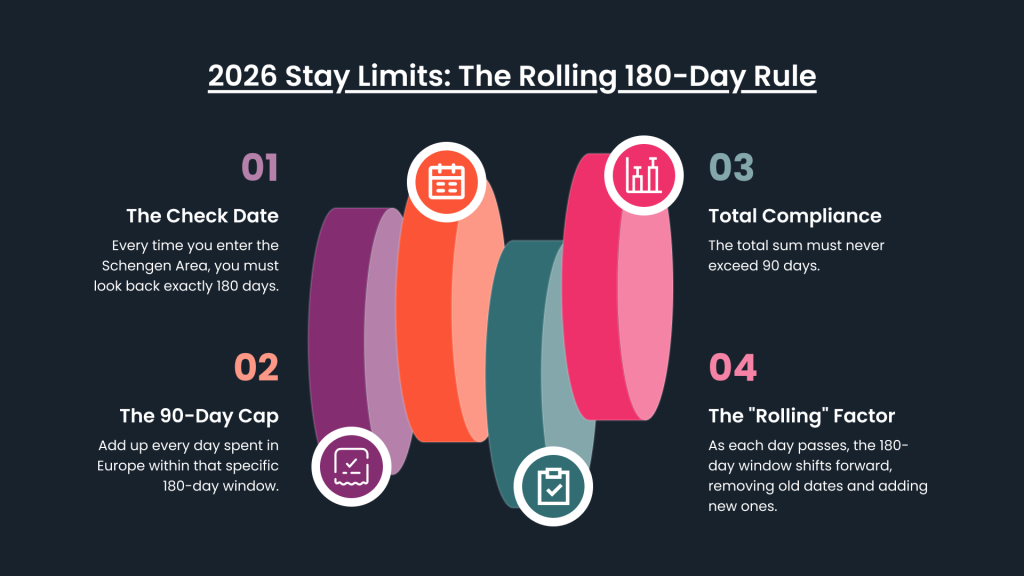
The 180-day window is not a fixed calendar period; it is “rolling,” meaning you must evaluate your travel history backwards from every single day you are present in a Schengen member state. Every day spent in a country belonging to the zone counts toward your limit, regardless of whether the trip was for business or leisure.
To maintain total compliance, we advise our Glasgow-based clients to implement a digital log of all travel. Overstaying, even by a single day, exposes you to heavy fines, deportation, or a multi-year Entry Ban that could jeopardise your firm’s international market access.
New Systems for 2026: EES and ETIAS Explained
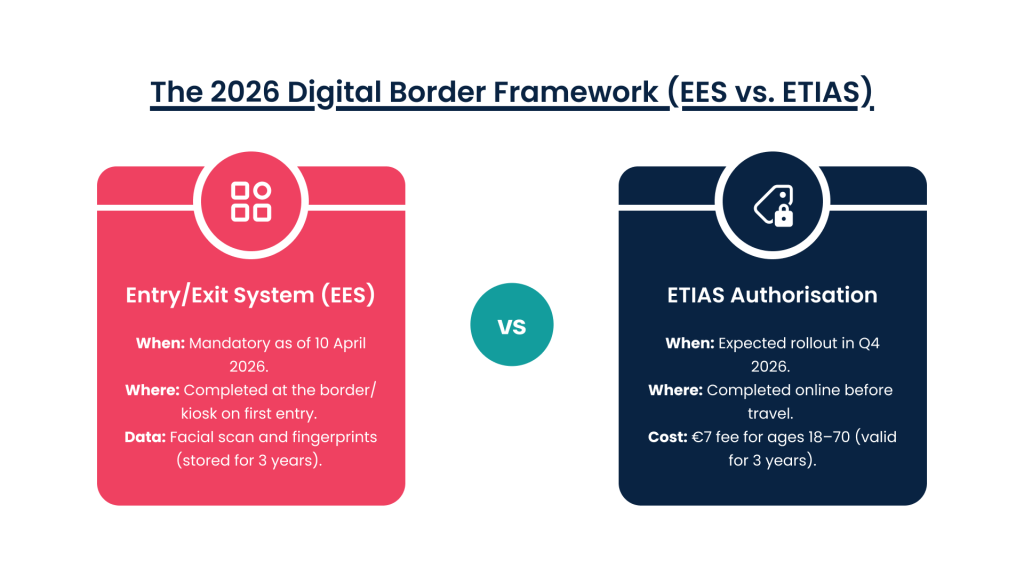
The year 2026 represents a historic shift in how European borders operate. Two major digital systems are now in play, designed to replace manual processes with high-tech biometric monitoring.
The Entry/Exit System (EES): Full Implementation
As of 10 April 2026, the Entry/Exit System (EES) is fully operational across 29 European countries. This system has officially ended the era of manual passport stamping. Upon your first entry into the Schengen Area this year, you must register Biometric Data, including facial scans and fingerprints, at an automated kiosk.
This digital record automatically tracks your 90/180-day balance. Because the EES flags overstayers in real-time, the margin for error has effectively vanished. For Glasgow firms with frequent travelers, conducting an internal audit of travel schedules is now a critical business necessity.
The ETIAS Travel Authorisation: Q4 2026 Launch
Scheduled for launch in the last quarter of 2026, the European Travel Information and Authorisation System (ETIAS) is a pre-travel screening requirement. UK professionals must apply for this authorisation online before departure once the system goes live.
- Cost: The application fee is €7 for adults aged 18 to 70.
- Validity: Once approved, an ETIAS remains valid for three years or until your passport expires.
- Purpose: It covers tourism and business activities such as attending meetings or site visits.
When Does a Business Trip Require a Formal Schengen Visa?
While most UK nationals travel visa-free for short stays, certain scenarios require a formal Schengen Business Visa (Type C). It is vital to distinguish between a “Business Visitor” and a “Worker.”
Permitted Business Activities vs. Gainful Employment
Under current trade agreements, UK professionals can engage in specific Permitted Activities without a work permit. These typically include:
- Attending meetings, consultations, and conferences.
- Conducting market research or technical training.
- Negotiating and signing commercial deals.
However, if you are providing services directly to a client for payment or filling a role in a local office, you are engaging in Gainful Employment. In these cases, a standard business entry is insufficient, and you must secure a national work permit for the specific country you are visiting.
Requirements for Non-British UK Residents
Professionals living in Glasgow who do not hold British or EU passports (Third-Country Nationals) often face stricter requirements. Even for a two-day conference, these individuals may need a formal visa applied for at the relevant consulate in Edinburgh or London.
Mandatory Evidence for Non-British Residents:
- Proof of UK Residence: A valid BRP or digital eVisa status valid for 3 months post-trip.
- Employment Verification: A formal letter from your Glasgow-based employer confirming your role and the trip’s purpose.
- Financial Subsistence: Evidence of “sufficient means of subsistence” (typically 3–6 months of bank statements).
Essential Documentation for a Successful Business Visa Outcome
If your trip requires a formal visa, the Burden of Proof lies with you to demonstrate that your visit is legitimate and temporary.
A formal Invitation Letter from the host company in Europe is the most critical document. It must be printed on official letterhead and clearly state the dates of travel, the nature of the business activities, and the financial arrangements. At JRI, our solicitors audit these documents to ensure they meet the rigorous evidentiary standards of individual Schengen member states.
2026 Business Travel Readiness Checklist
| Requirement | Detail | Action |
| Passport Validity | Must be less than 10 years old | Renew if near expiry |
| Travel Insurance | Minimum €30,000 medical coverage | Must cover all Schengen states |
| EES Registration | Biometric facial and fingerprint scan | Required at first 2026 entry |
| ETIAS Status | Required from Q4 2026 onwards | Apply via official EU portal |
Fortify Your European Travel Strategy
Don’t let digital border changes disrupt your commercial goals. Partner with JRI’s expert solicitors to ensure total compliance with 2026 Schengen rules.
Consult with JRI’s Global Mobility Experts Today
How JRI’s Expert Lawyers Support Your Global Expansion
Navigating the intersection of EES, ETIAS, and post-Brexit immigration law requires specialist legal foresight. A single administrative error can lead to a refused entry, which not only causes immediate financial loss but also creates a permanent “red flag” on your digital travel record.
At JRI, our team of specialised immigration solicitors in Glasgow provides high-level legal support to protect your firm’s interests. We act as your strategic partner, offering:
- Visa Route Assessments: We determine if your trip qualifies as “business” or if you require a specific work permit.
- 90/180 Rule Audits: We review your staff’s travel history to consolidate their remaining stay allowance.
- Document Substantiation: We assist in drafting invitation letters and verifying financial evidence for non-UK national employees.
- Administrative Review: We provide robust representation if a visa or ETIAS application is unfairly refused.
By choosing JRI, you gain a partner dedicated to your corporate longevity and legal security. Our inclusive approach ensures that every professional receives expert counsel tailored to their unique circumstances. Let our expertise be the foundation of your international success.