A refusal of a UK visa application immediately creates a period of intense uncertainty. When you decide to challenge that decision through an Administrative Review (AR), your focus immediately shifts to the wait. Understanding the realistic timeline for a final AR decision from the Home Office is crucial for managing your professional, financial, and personal plans.
This article provides clear, factually correct information on current Administrative Review processing times in the UK, details the factors that cause delays, and explains the critical legal context.
The Administrative Review (AR) Mechanism: A Critical Overview
Administrative Review is a vital internal Home Office mechanism. It allows you to challenge a refusal of an eligible UK visa or immigration application if you believe a case working error occurred. This is not a full appeal that re-evaluates your personal circumstances, but a review to ensure the Immigration Rules were applied correctly to the evidence you submitted.
The Core Function of Administrative Review:
The scope of an Administrative Review is strictly limited. It exists only to correct mistakes made by the caseworker in the initial decision.
- Goal: To request a review of the decision based only on the evidence and information originally submitted with your visa application.
- Basis: The sole ground for AR is proving a case working error for instance; the wrong Immigration Rule was applied, or key evidence was overlooked.
- Limitation: You cannot submit new evidence or documents unless the caseworker specifically requested them and failed to consider them.
The Critical Submission Deadlines:

Failing to meet the strict time limits for AR will lead to the rejection of your application, regardless of the merits of your case.
| Application Location | Deadline to Submit AR | Starting Point |
| Inside the UK | 14 calendar days | Date you received the refusal decision letter. |
| Outside the UK (Entry Clearance) | 28 calendar days | Date you received the refusal decision letter. |
Crucial Actions:
- Immediate Review: Scrutinise the refusal letter the moment you receive it to identify the deadline and specific grounds for refusal.
- Valid Application: Ensure you submit the AR form fully completed and pay the required fee (currently £80). A late, incomplete, or unpaid submission will be instantly rejected.
Home Office Service Standards vs. Operational Reality
The Home Office sets out a formal service standard for Administrative Review decisions, but current operational reality often dictates a much longer wait. It is essential to distinguish the official target from the actual experience.
The Home Office Service Standard: The 28-Day Target
The UK Visas and Immigration (UKVI) official target is to conclude an Administrative Review and notify the applicant within 28 calendar days.
- This timeframe begins once the Home Office officially confirms receipt of a valid AR application.
- Crucial Note: The 28-day period is a service standard, meaning it is the target the Home Office aims to meet, not a legal guarantee.
Factors Causing Significant Delays:

Decisions often take considerably longer than the 28-day standard. Recent data suggests in-country reviews can take six months or more, and overseas (Entry Clearance) reviews sometimes exceed 12 months.
Key factors influencing this delay include:
- High Application Volume: Systemic pressures and heavy Caseworker Load across all visa routes create backlogs in the dedicated AR unit.
- Case Complexity: If the alleged error involves a nuanced point of law or requires review of extensive evidence, the caseworker must conduct Internal Consultations with policy teams, significantly extending the review period.
- Administrative Backlogs: Changes to Home Office systems, staff allocation of shifts, or periods of peak demand contribute to significant administrative backlogs.
Legal Protection and Escalating Unreasonable Delays
A prolonged wait is stressful, but understanding the legal protection afforded to applicants can provide reassurance and strategy for action.
Legal Status During the Wait:
For those who applied for AR from inside the UK, your legal status is protected until the decision is formally served.
- Section 3C Leave: If your original application was made in-time, Section 3C Leave of the Immigration Act 1971 automatically extends your existing immigration permission.
- Protection from Removal: The Home Office will not typically take steps to remove you from the UK while your AR application is pending.
Steps for Communication and Escalation:
Applicants should be prepared to proactively manage communication, especially if the delay is lengthy.
- Initial Enquiry: After the 28-day target has passed, you can submit a formal, professional enquiry to the AR unit regarding the delay.
- When to Escalate: If the delay becomes clearly unreasonable, particularly past the six-month mark without substantive communication, legal escalation may be necessary.
- Pre-Action Protocol (PAP): A formal Pre-Action Protocol (PAP) Letter is the necessary precursor for Judicial Review. It challenges the lawfulness of the delay and demands a decision within a set timeframe.
Defining the Core Legal Grounds for Administrative Review
Mastering the precise legal terms used in this process is vital for ensuring your AR application is robust and legally sound.
A successful AR application must clearly demonstrate one of the following specific errors:
- Error of Law: The caseworker misinterpreted or incorrectly applied an Immigration Rule or a binding legal precedent to your case.
- Error of Fact: The caseworker failed to consider evidence you submitted or made a factual misstatement that directly impacted the decision.
Both errors are crucial to identifying a Procedural Impropriety, which is the failure of the decision-maker to follow the correct legal process or rules of natural justice.
Administrative Review vs. Judicial Review (JR):
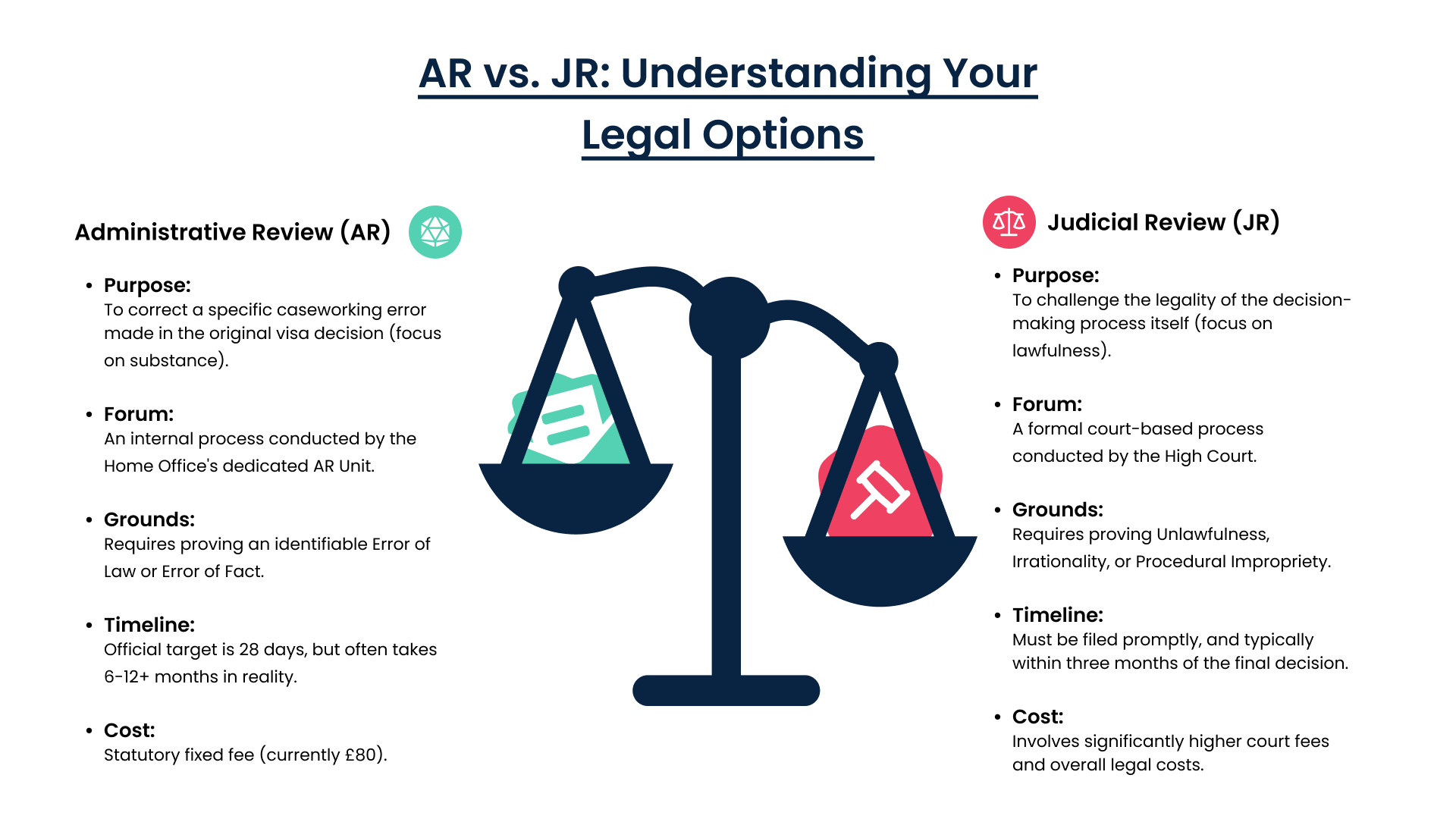
These two legal avenues serve fundamentally different purposes, though both challenge the Home Office.
| Feature | Administrative Review (AR) | Judicial Review (JR) |
| Purpose | To correct a caseworking error in the original decision (focus on substance). | To challenge the lawfulness of the decision-making process (focus on legality). |
| Forum | Internal Home Office review process. | Court-based process (Upper Tribunal or High Court). |
| Grounds | Error of Law or Fact. | Unlawfulness, Irrationality, or Procedural Impropriety. |
| Timeline | Target 28 days (but often 6-12+ months). | Must be filed promptly and within three months of the decision/delay. |
| Cost | Statutory fee (£80). | Significantly higher court and legal costs. |
AR offers a quicker, significantly less costly route. Judicial Review is typically a remedy of last resort, pursued when an AR is unsuccessful or if the delay itself is deemed unlawful.
Partnering with JRI Solicitors: Expert Guidance for Your Administrative Review
The Administrative Review process, while intended to be straightforward, is highly technical and unforgiving of errors or missed deadlines. Successful AR applications rely on presenting legally precise grounds that clearly demonstrate the Home Office’s error.
Based in Glasgow, our expert immigration lawyers understand the current operational realities of Home Office processing times and leverage this knowledge to benefit our clients.
We provide comprehensive support by:
- Immediate Assessment: Reviewing your refusal letter to confirm your eligibility for AR and identifying the strongest legal grounds for review.
- Flawless Submission: Preparing and submitting your AR application, ensuring that all procedural requirements and the tight deadline are met, thus preventing rejection due to invalidity.
- Proactive Management: Monitoring the Home Office timeline, managing expectations, and handling all formal communication on your behalf.
- Strategic Next Steps: Advising the viability of subsequent steps, including a Judicial Review, should the AR be unsuccessful or unreasonably delayed.